Monday, 7 January 2019

Expect The Unexpected: 5 Tips To Protect Your Travel Plans When Disaster Strikes

Image Alternative text


January 2019 

Hurricane Sandy made a mess of my hometown in New York City. But I wasn’t there. I was researching in Ecuador, ones of the destinations featured on our Top 10 countries for 2013 list in Best in Travel 2013 when the storm hit. Like many travelers, I found myself stranded for several days, trying to find out when I could get back.

It’s been a few weeks and New York City and surrounding areas are picking up the pieces. Manhattan is already mostly clicking at pre-Sandy levels, but back at the time Sandy hit the East Coast there was a lot of uncertainty. I watched as other travellers spent hours on the phone or on their computers frantically trying to find the next available flight home only to later find that later flights had also been cancelled. With the holiday travel season kicking off, it's understandable that many travellers are concerned about what happens when an act of nature disrupts their upcoming travel plans.

The unfortunate topic of 'what to do when disaster strikes your vacation' is something all too familiar. Being prepared, or better yet, knowledgeable of what to do if you ever find yourself in this situation is important. To help, we created a helpful checklist of what you should do to protect your travel plans, and what to do when disaster big or small hits.
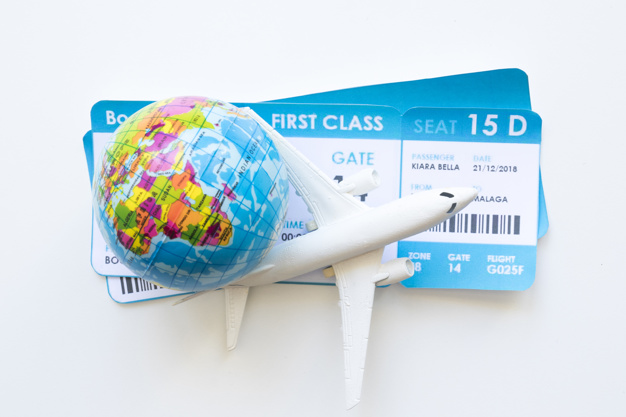
International Travel Packages From Mumbai
Credit : freepik.com

List of Tips To Protect Your Travel Plans When Disaster Strikes


1. Get travel insurance


I'm always asked if travel insurance is worth it. The short answer is yes. (The long answer is yesssssssss.) Especially for the winter holiday travel season, weather often dampens the best-laid plans, be it a hurricane, blizzard, or even just a small snow flurry. With a large-scale disaster, you shouldn't have to explain to an airline why you might not feel comfortable travelling to a place even if the runways are clear, so skip all that and get travel insurance - it will prevent a lot of stress if it's needed. If you're new to travel insurance, we have answers to frequently asked questions about travel insurance that can help get you started.

2. Ask questions


When in doubt, ask questions and use all of the resources at your disposal. But before you ask, it's important to know the key questions to help you decide the best course of action - for some guidance, see our article on the 5 questions to ask when disaster strikes your travel plans. Is it too soon? Does the host destination even want visitors? Can you change your itinerary? All of these and more can help you make the best choice when nature has thrown a wrench in your travel plans.

3. Know the real situation


It's hard to make a final call about whether or not to travel if you don't have a true read of what's going on on the ground. Make some calls to friends, local businesses, expats, the embassy, etc. Check online travel communities like the Thorn Tree travel forum that has an extremely engaged audience giving you real updates and how it affects travel as well. They have a true pulse on the current climate on the ground - better, often, than the local media can provide - and can help you decide if you should go.

4. Don't just cancel all together


Nothing helps a destination's local economy like tourism. If you don't do the research to understand the situation and cancel out of fear, you might be contributing unnecessarily to an economic slump and missing out on a fantastic travel experience at the same time. If it's not safe to go when planned, change the booking for the future but don't cancel entirely and cross it off your list. These places will rise again, and when they do, tourists can help keep them on their feet. For example, after the earthquake and tsunami in Japan, the absence of tourists from perfectly accessible and safe areas only added insult to injury. To encourage visitors to return to the region, we just released a brand-new chapter on northern Honshū (Tōhoku) as a free PDF download that provides a critical update for travellers on the area that was most strongly affected by the earthquake and tsunami two years ago. If you're curious to find out more about the current state of Tōhoku, Lonely Planet author Rebecca Milner's recent article declares Tōhoku ready and open for travel.

5. Understand the best ways to help


Beyond just doing your duty as a traveler, there are plenty of opportunities to help the destination even if they aren't ready for tourists. You can donate to local on-the-ground organisations who are providing food, shelter and clean-up efforts and there are also ways you can donate time by volunteering. Make sure they are ready for volunteers and that you're going about it properly. Often times funds and goods are what a place needs immediately following a disaster, with rebuilding to follow. Disorganised but well-meaning travellers hoping to help can easily get in the way, so it's always best to offer your assistance through a reputable relief organisation. To get started see 10 things to know before you volunteer overseas and read Lonely Planet’s Volunteer: A Traveller’s Guide to Making a Difference Around the World – the full book is available FREE for a limited time in the Apple iBookstore and as a free PDF download.

The most important thing to remember is that travel can be used as a force for good and you can truly help places that may be struggling to get back up from a disaster.

And if you're wondering about Manhattan's Christmas displays and all of the many things to do in New York at Christmas, the displays will be up and the skaters a-skatin'. I look forward to seeing you in my city soon, even if a snow storm delays your flight.

Safe travels!


To Know More Information About International Travel Packages From MumbaiBy Crossworld Holidays- Tour Operator in Thane Mumbai


Crossworld Holidays gives the Package tour operators in Thane Mumbai Contact us at (+91) 4038 4747 or Email us at - info@crossworldholidays.com

Friday, 4 January 2019

Winter in Hokkaido, Japan

Image Alternative text

January 2019 

Hokkaido is Japan’s wild frontier, especially in winter, when cars are swapped for snowmobiles and huskies, cranes dance, hot springs steam and the sparkling Sapporo Snow Festival comes to town...


Japan Tour Packages From Mumbai
Credit : unsplash.com

Hello Kitty rushed through the crowd, waving as she went. A 2m-tall fox posed for photos with a group of old Japanese women. News crews filmed their reports from the steps of a Malaysian government building made entirely of snow. And as more snow fell, a brass band picked up its instruments and launched into a funky version of ‘Winter Wonderland’. With a dramatic flourish, Sapporo’s annual Yuki Matsuri (Snow Festival) was officially open.

There’s no shortage of snow up on the northern Japanese island of Hokkaido. In winter, it covers everything. “To clear the snow in Sapporo, the government spends ¥100 million every day,” local guide Kunihiro Oikawa told me. “That’s one million US dollars (£600,000) every day. For 100 days!”

The Snow Festival started in 1950 on Odori Koen, a strip of park in the heart of Hokkaido’s capital. “The art teacher at a school in Sapporo recommended the students make snow statues, maybe to demonstrate their art abilities or for fun,” Oikawa said. “That’s how it began. It grew bigger. Now, every year, two million people come from all over the world.”

The scale of the statues is impressive. A 23m-high recreation of the Itmad-ud-daulah tomb from Agra in India, inspiration for the Taj Mahal, used 2,250 tons of snow and took 3,800 people 30 days to build. I watched men with long brushes trying to clean fresh snow off a house-sized bear; it was a battle they couldn’t win – the snow just kept coming.

We walked the length of the festival, passing statues of Manga characters, Japanese legends, animals and, of course, Hello Kitty. Kids bundled in thick layers zipped down blue ice slides. Snowboarders jumped off a ramp, attempting acrobatic stunts. It was bitterly cold but stalls sold warming Hokkaido specialities such as crab soup, scallops and hot wine. Not far away, I found Ramen Alley and thawed out in one of its small, steamy cafés with a bowl of noodles.

Even better, just a short bus ride from the city centre, was Sapporo Beer Museum. Built in 1876, it was Japan’s first beer factory. A young Japanese man, Seibei Nakagawa, defied Japan’s isolationist policy to secretly travel to Europe and learn how to brew beer, before returning to Sapporo. For around ten years, Nakagawa was the only man in Japan who knew how to make beer. I imagine he wasn’t short of friends.

List of Things You Need To Know Before Japan Trip

Winter wonderland


In the morning I caught a train out of Sapporo into more remote parts. Hokkaido is Japan’s wild frontier, one of the largest and least-populated regions, home to the indigenous Ainu culture and some of the country’s oldest national parks. In the summer, it’s a place to explore colourful lavender fields, mountains and lakes, and to spot brown bears and other wildlife. But in winter, the landscapes of Japan’s northernmost prefecture are dazzling, a white world of ice and snow, with excellent skiing at resorts such as Niseko.

I hadn’t come to ski, but there are plenty of other ways to enjoy the snow. From the town of Furano, where metre-long icicles hung from shopfronts, I headed out into the countryside on a snowmobile, speeding through forests of silver birch along roads closed by snow. The wind was ridiculously cold. When we stopped for breaks, guide Syuji Kodaka opened the snowmobile covers so we could defrost our fingers on the hot engines.

The next day I drove out of town with guide Toshihiro Kato, heading for Daisetsuzan National Park, the largest in Japan. “Today is very cold, so we can see ‘diamond dust’,” Kato said, pointing to where the air was sparkling in the sunlight. “The moisture in the air is frozen.”

We drove through flat land, vegetable farms during the summer now blanketed in crisp velvety white. Snowploughs and blowers were out on the roads. Men and women with big shovels cleared paths and driveways. This level of snow would bring Britain to a halt for a decade. Here, it’s just a way of life. At Daisetsuzan, we put on snowshoes and hardcore winter clothes. The skies were blue but we still needed to wrap up: “Right now,” said Kato, calmly reading a thermometer, “it’s -14°C.”

Powdery snow squeaked underfoot as we hiked through the forest. Kato measured the depth of snow we were walking on with a metal pole; beneath our feet, there was a 2m layer. Branches of birch, pine and fir trees were outlined with a sugary white coating. The effect was magical. Some tree trunks were splitting, the water inside freezing, expanding and contracting. It can reach as low as -40°C here at night.

We climbed to a high ridge. There were dead trees on the slope of the still-active volcano, Tokachi-dake; they’d been caught in the firing line of the last major eruption, 90 years ago. “It’s still alive,” Kato told me. “On a clearer day, we see smoke coming from the top.”

Back in the forest, we stopped for lunch. “Follow me, please,” ordered Kato, and we shuffled around in a square, flattening the snow, leaving an elevated platform as our table. Kato heated a pot of vegetable soup on a stove; we ate it with hazelnut bread and green tea as snow fell on the forest.

One of the best things about getting cold in Hokkaido, though, is getting warm again. There are onsen (hot springs) across the region; some inside, others just outdoor rock pools. At Hakuginso onsen, I took my kit off with a load of old Japanese guys and climbed into a hot pool to warm my bones.

Dog days


There was diamond dust in the air again as I travelled by train from Furano to Asahikawa. Not to be outdone by Sapporo, the city holds an annual World Ice Sculpting Competition. Along the high street, teams worked with chainsaws and blasters on dragons, warriors and spiders’ webs. The sculptures were intricately detailed, right down to a crocodile’s individually carved teeth.

There was a Winter Festival too, down by the river, with snow statues of eagles, martians and Sulley and Mike from Monsters, Inc. After admiring the icy art, I caught a bus out to Takasu to meet Dan and Kyoko Murakami and their Alaskan and Siberian huskies. “This isn’t an amusement park ride where you strap in,” Dan told me during the safety briefing. “If you’re not paying attention, there can be problems.”

Kyoko started attaching dogs to the sled. The others barked excitedly, hoping to be picked – they love to run. “Each dog has a personality,” explained Kyoko. “Sox, at the front, is a good leader. She’s a strong mum. I raise them from puppies. I know each personality.” The dogs tugged impatiently. I detached the brake, jolted forward, and we were off, the huskies pulling me at 30km/h through a pristine white world.

It was surprisingly easy, standing on the runners, instinctively leaning with the curves. The wind was icy on my face. But, incredibly, the dogs risk overheating. “They’re cold weather animals,” Dan told me. “Today’s only -3°C, so they’re getting hot.” Each time we paused, the dogs jumped into the banks, cooling their bodies and faces in the snow.

In the morning, I picked up a rental car and drove out of the city. Hokkaido soon became wilder – and more treacherous. Highways were icy, with wind blowing snow across the road. I saw cars slip and spin into banks of snow. My little car couldn’t handle the snow-filled country lanes and got stuck. I considered abandoning it and walking for help but managed to dig the tyres out and turn around.

The blizzard lasted all day and most of the next. Finally, I reached Tsurui village in Kushiro Wetlands National Park, Japan’s largest wetlands and home to the iconic red-crowned crane. “This is a secret spot,” birding expert Makoto Ando told me at dawn the next morning as we stood on a small bridge, watching a lone crane standing in the misty river. (He forbade me from giving the bridge’s name in case it gets swamped by photographers.)

I can see his point. At Otowa Bridge, a better-known crane hotspot, around 50 photographers had lined up, each with a cannon-sized lens, all jostling for position. As the day warmed, around 80 cranes took flight from the river. “Temperature and timing is everything for crane-watching,” Aldo explained. “In the morning, they’re in the river. This river is 5°C. Outside is -15°C or -20°C. To them, it looks like a hot spring. In the day, they move to feeding stations, then they come back to the river in the evening.”

The red-crowned crane – or tancho (red top) in Japanese – is the official bird of Hokkaido. “It’s the most beautiful bird,” said Aldo. “It’s in so many traditional stories. It means long life.”

Hokkaido’s cranes were nearly hunted to extinction. “In this area in 1924, there were only 14 left alive,” Aldo continued. “In the 1950s and 60s, the government protected them. Now, 1,200 cranes have come back. But it’s still not enough; 120 years ago there were cranes all over Hokkaido. They’re still endangered.”

We spent the day, from sunrise to sunset, finding and photographing cranes. Whooper swans from Russia mingled with them at a feeding station in Tsurui village. I watched two cranes circle each other, leaping and spreading their wings. “That’s the marriage dance,” Aldo said. “It’s how they decide a mate. They try many times before they’re successful. Females can be very difficult.”

Once ‘married’, cranes usually stay together for life. We drove to Akan International Crane Center, arriving for feeding time. Dozens of regal-looking cranes stalked the snow, lowly crows moving between their legs. They looked antsy; they knew what was coming. As a Japanese woman threw fish onto the snow, black kites, white-tailed eagles and mighty Stellar sea eagles swooped in from the surrounding mountains. The birds scrambled for the fish, the peak of Akan-Fuji – which resembles Mount Fuji – in the background.

Life on the edge

I drove north the next morning, heading for the Shiretoko Peninsula, referred to by the Ainu as ‘the end of the world’. With the sun shining, I saw the incredible landscapes that I’d missed in the blizzards. Sweeping fields were covered with glistening snow. Volcano and mountain peaks were crisp against the blue sky.

I stopped at Lake Kussharo, which was covered by ice and snow. A pair of swans had the right idea, resting in a little corner of the massive lake where the steamy water is naturally heated. Further east was Mashu Lake, deep blue, only partially frozen, and framed by mountains.

Snowy peaks turned pink and orange as I reached the remote town of Rausu in Shiretoko National Park at the far edge of Japan. Here I stayed in a traditional tatami room at Daiichi Hotel, which had onsen and private dining rooms serving some of Hokkaido’s seafood riches, including sashimi and whole crabs.

The next day, it was another early start. In darkness, I made my way down to the harbour to find boat captain Kamio Norikatsu. Our boat crunched through thick slabs of sea ice in the harbour. As daylight rose, boatmen threw fish out for around 200 white-tailed and Stellar sea eagles. “Usually we see this many, but only in the season, in February,” Norikatsu said. “Some white-tailed eagles and other birds live in the mountains here but most come from Russia.”

The eagles perched on ice flows and tore the fish apart. Kites and bold crows tried to grab a share or waited humbly for scraps. Back on land, it started snowing again. Keen to see ‘the end of the world’, the very extreme of the peninsula, I drove along the coastal road. But a few kilometres from the end, snow blocked the way. I helped a family whose car was stuck, then turned back.

On my return to town, I spotted a fox by the road, warming in the sun. He eyed me craftily from behind a tree. I watched him climb into the snowy hills and disappear among the rocks and trees, walking in this winter wonderland.


To Know More Information About Japan Tour Packages From Mumbai ByCrossworld Holidays- Tour Operator in Thane Mumbai


Crossworld Holidays gives the Best International Tour Packages From Thane, Mumbai, Contact us at (+91) 4038 4747 or Email us at - info@crossworldholidays.com
Tuesday, 25 December 2018

10 Things You Need To Do Before Any International Trip


December 2018 

Memorize the following and make it your mantra: Good travel is the result of good planning. That applies to any trip you take, but it’s especially true when you’re heading to a foreign country. It can be tempting to book a ticket and start fantasizing about your getaway, but there’s work to be done. In addition to the planning any trip requires—lodging, restaurants, activities, and so on—international travel calls for extra steps and research to ensure a stress-free experience. Fortunately, we’ve broken it all down into a ten-point plan that will help make your next international getaway a success.

International Travel Packages From India
Credit : unsplash.com

List of Things You Need To Do Before Any International Trip


1. Check your passport and apply for any necessary visas.


While it’s not necessary to memorize your passport’s expiration date, it’s best to take a look at it—and to verify that you know where your passport is stored—before making any international travel plans. Generally speaking, you want your passport to be valid for at least six months after entering a foreign country, though some nations will let you get away with less; refer to the State Department’s website for full details, organized by country. If its expiration date is approaching, you’ll need to renew your passport before your next overseas trip. Though not a universal requirement, tourist visas are needed to visit many nations around the world, and the application process varies greatly from country to country. If you have an American passport, the State Department’s website is the best resource for determining if you need to apply for a tourist visa based on the countries you’re visiting and how much time you plan to spend in each one. It’s important to note that applying for a visa can be costly and time-consuming, so it’s best to get it out of the way as soon as possible. Some countries, like China, offer multiyear visas that allow for multiple entries and exits; if there’s a chance you’ll return to a country sooner rather than later, multiyear visas can save you a lot of time and money in the long run.

2. Get vaccinated and stock up on medicine.


Depending on where you’re going, you may need to get special vaccines or medications as a precaution against various diseases. For the most comprehensive and up-to-date medical recommendations, check the Centers for Disease Control and Prevention’s website, which also lists health advisories by country. In addition, if you routinely take any prescription medication, make sure you have enough to cover the duration of your travels so that you don’t run out while you’re overseas. Finally—and especially if you’re going to any remote regions—it’s wise to pack non-prescription medicines (aspirin, Imodium, etc.) that may not be easy to find.

3. Check for travel warnings/advisories and register your trip.


Before you travel abroad, refer to the State Department’s Consular Information Program for Travel Alerts (“short-term events we think you should know about when planning travel to a country”) and Travel Warnings (“We issue a Travel Warning when we want you to consider very carefully whether you should go to a country at all.”). It’s worth checking for these notices both before you book a trip and just before you depart. You should also enroll in the Smart Traveler Enrollment Program (STEP), which makes it easier for the State Department to assist you in the event of an emergency. Similarly, write down the addresses and phone numbers of any American embassies or consulates in the destinations you’ll be visiting, in case you need to contact them.

4. Prepare your finances.


Before you travel overseas, call your bank and credit card providers to let them know where you’ll be; if the companies see foreign charges with no notice that you’re abroad, they might freeze your cards, which can be quite annoying if you’re in a shop or trying to pay for dinner. Before you travel internationally, be aware of the exchange rate and know how much things generally cost wherever you’re going so that you get some sense of how much you’re going to spend. If you want to get traveler’s checks, feel free to do so, but know that they are not widely accepted and are exchanged at a less favorable rate than the one you’ll find at an ATM, no matter where you are in the world.

5. Make copies of travel documents.


Most importantly, have at least one color copy of your passport’s ID page stored somewhere safe and separate from your passport. You should also make copies of any visas that pertain to your current travels. Hotel reservations, train ticket confirmations, and all other travel documents should be copied as well. In this digital age, it is very convenient (and eco-friendly) to only have digital copies of these documents handy. That’s fine, but be sure that these items are saved to your device locally so that you can access them without an Internet connection. Also, if you’re going to store sensitive information (like a scan of your passport) on your phone or in your email inbox, make sure your passwords are strong enough to keep potential intruders out.

6. Obtain an International Driving Permit.


The international road trip of your dreams isn’t going to happen unless you plan correctly. That’s because it’s illegal to drive without a valid driver’s license and insurance in most countries, and many do not recognize U.S. driver’s licenses. Car rental companies usually offer insurance, but for the license you’ll need to obtain an International Driving Permit, either from AAA or the National Auto Club. It’s also smart to familiarize yourself with local driving laws wherever you plan to drive. Contact foreign embassies for official rules and regulations regarding driving.

7. Get all the necessary gear for your electronics.


Electrical outlets are different all over the world, so you’ll need to have adapters that allow your devices to plug into foreign sockets. Your best bet is to buy an adapter with different settings that adjust to most outlets, so you only have to worry about one adapter instead of one per country. You also need to check the strength of the electrical current wherever you’re going and make sure your devices are compatible—cell phones and computers often are. If you have a device that’s not compatible with a higher or lower current, then you’ll need to buy a transformer or leave that gadget at home. Finally, if you don’t own them already, it’s worth investing in portable phone chargers and/or spare batteries that can be charged and swapped into phones, cameras, and other electronics so that you can stay fully charged while you’re on the go.

8. Learn key phrases in the local language.


Of course it’s best practice to learn basics like “Hello,” “Thank you,” and “Where is the bathroom?”, but the more you can say in the local tongue, the better. Then there are times when being able to effectively communicate is a matter of health and safety. If you have any food allergies or severe medical conditions, it’s important to learn how to inform others about those issues in a foreign language. If you don’t feel comfortable with your language abilities, then cheat and print out a document with relevant phrases or make flashcards that you can carry with you.

9. Research entrance and exit fees.


Regardless of whether a country requires you to obtain a tourist visa, it may levy an entrance and/or exit fee against you. For example, Argentina allows U.S. citizens to visit for up to ninety days without a visa, but a $160 “reciprocity fee” must be paid before entering the country—you won’t be allowed in without a copy of the receipt. Once again, the Consular Information Program is the most reliable resource for determining whether a country charges these fees; on any country page, look under the Entry, Exit & Visa Requirements tab for complete information.

10. Buy health and travel insurance.


Before you travel, check your health insurance policy to see if it includes international coverage. If not, consider buying a short-term policy that will cover you while you’re abroad, in case something should happen. Similarly, a smart way to protect your trip and your money is to purchase travel insurance. Policies and coverage vary from provider to provider, but the basic idea is that you can have your money refunded if your trip has to be cancelled, postponed, or cut short for any number of reasons.


To Know More Information About International Travel Packages From India ByCrossworld Holidays- Tour Operator in Thane Mumbai


Source - www.fodors.com

Crossworld Holidays gives the Travel Agent in thaneContact us at (+91) 4038 4747 or Email us at - info@crossworldholidays.com

Tuesday, 18 December 2018

Top 10 Reasons To Visit Shimla

Image Alternative text

December 2018 
With winters coming in, it is an ideal time to plan a trip to "The Queen of Hills". Here are the top 10 reasons to visit Shimla, that is a delightful escape from daily hustle bustle of life.


Domestic Package Tours Booking Thane
Credit : unsplash.com

Top 10 reasons to visit Shimla


1. The Mall

On walking up to The Mall—Shimla’s main street, you’ll come across the loveliest sights. Home to some famous local attractions like the Christ Church and markets operating from vintage colonial buildings, The Mall is truly the heart of this hill station.

2. Observatory Hill

The old Viceregal Lodge is perhaps the most resonant of old structures in Shimla. If you go there by foot, there are interesting stops on this 2-hour walk from the Mall.

3. Jakhoo Hill

Jakhoo Hill, towering over the ridge, is Shimla’s highest point, with a Hanuman Temple on top. The huge red Hanuman statue built in front of the temple is clearly visible from The Mall and the Ridge. Sunset views here are especially magnificent during the monsoons.

4. Heritage Walks in Shimla

Shimla is best discovered on foot. Opt for the Heritage Walking Tours, one of the most famous walking tours in India, to explore the rich history of this hill station.

5. Lakkar Bazaar

Don’t miss the Lakkar Bazaar. The bustling market is famous for woodwork as it is lined with shops selling lovely souvenirs.

6. Beautiful Churches

Apart from the famous Christ Church, Shimla has a number of magnificent churches, which are a huge tourist draw.

7. Mashobra and Chail

If you have enough time on your hands and want to explore some nice places around Shimla, plan a day’s outing to Chail and Mashobra, which are at a distance of 60 km and 14 km respectively.

8. Shopping in Shimla

There are many local bazaars in Shimla, where you can buy snuggly woolens, decor items, Tibetan carpets, plum and apple wines as well as other souvenirs.

9. Eating Out

Most good restaurants in Shimla are clustered around The Mall area. Himachal Tourism’s Ashiana Restaurant, right on The Ridge, is very popular. Alfa on Scandal Point also dishes out good food. Devicos serves Indian, Continental and Chinese cuisines, and has a bar as well. Baljees is hugely popular, with a choice of Indian, Chinese, Continental and Thai cuisines.

10. A Ride on Kalka Shimla Toy Train

Don’t miss the metre-gauge heritage toy train ride from Kalka to Shimla for one of the most spectacular rail journeys you’ll ever experience. It’s a 6-hour climb up the Shivaliks.

So, all set to explore the magic of this charming hill station this winter? We hope you experience these 10 reasons to visit Shimla and much more. So go ahead and enjoy a happy vacation amidst snow and mountains!


To Know More Information About Domestic Package Tours Booking Thane ByCrossworld Holidays- Tour Operator in Thane Mumbai


Source - www.ixigo.com

Crossworld Holidays gives the Travel Agent in thaneContact us at (+91) 4038 4747 or Email us at - info@crossworldholidays.com
Monday, 3 December 2018

Mauritius Attractions

Image Alternative text

December 2018 
An insider's guide to the best things to do and attractions in Mauritius, including visiting Port Louis, Grand Baie and where to shop. 

Mauritius has plenty to see and do, should you want a break from the sun lounger. A number of French colonial houses, several interesting museums and shopping centres around the island provide entertainment if the weather's not great. When it's fine, a famous botanic garden, animal parks and nature walks in eco-adventure playgrounds or the national park beckon.

Mauritius Tour Packages From Mumbai
Credit : unsplash.com

Here's a selection of the best attractions.

Port Louis

Most people come to 'Por Loowee', Mauritius's capital, to shop, although it has several cultural attractions. The Blue Penny Museum is home to the world's first colonial stamp and you can see an ancient dodo skeleton, on the first floor of The Natural History Museum. Get a sense of multi faith Mauritius here by gazing over churches, mosques, and Chinese and Indian temples from the citadel, or join the locals and ex-pats on a late afternoon stroll up Signal Mountain - named after the antennae on top - to see the city at sunset.

Grand Baie

A fishing village 20 years ago, this sheltered bay bobbing with boats is now the main tourism hub of the island. Nicknamed "Le Trop" for its hot shopping and après-sol entertainment, it has plenty of excursions, attractions and beaches nearby. Kids will love the Aquarium (mauritiusaquarium.com) in the north, with the chance to feed fish and eyeball a shark. 

Learn the island’s history at the interactive museum, L’Aventure du Sucre (aventuredusucre.com) where rum tastings and purchases are possible and whose restaurant Le Fangourin, under a flamboyan tree, makes a good lunch spot. Hire a guide at the entrance to take you around 18th- century Pamplemousses Botanic Gardens (officially known as Sir Seewoosagur Ramgoolam Botanic Gardens), 300 yards away, whose centrepiece is a pond of giant Amazon lilies.

Eureka

This French colonial mansion once owned by the island's biggest sugar baron is a feat of engineering, with 109 doors and a complete wrap around balcony to keep residents cool in the tropical heat. Its turreted rooftop windows look particularly pretty against the backdrop of the Moka Mountains. Take the track from the beautiful garden with ebony and bamboo, to a swimming hole beneath a waterfall, as next door neighbour Pierre Poivre once did.

Casela World of Adventures

The star attraction at this sanctuary for rare birds used to be the pink pigeon, but it's now a walk with lions in the wild in the neighbouring Yemen estate. The savannah-style landscape may have inspired the introduction of over 100 African animals, including zebra and ostrich, hyenas, white rhino and hippopotamus, seen from a mini- safari bus (10.30am, 11.30am, 1.30pm, 3.30pm). The active can still zoom around here on a quad bike, scattering deer in their wake, ride on"the longest zipline in the Indian Ocean", or take a more leisurely pootle around by segway (minimum age 12 years). Casela’s arrivals hall was recently revamped by the artists behind Game of Thrones, and giraffe feeding, camel rides, and encounters with tiger cubs, hippos and rhinos are new activities, along with a 4D cinema, mud karting and a hair-raising canyon swing. It’s easy to spend the day here, and there’s a restaurant on site.

La Vanille Nature Park

Kids love this animal breeding park sculpted among lush foliage, where they can hold a baby Aldabra tortoise or crocodile, fruit bat or iguana, visit the insectarium and fossil museum, and play on the jungle playground before heading to the Hungry Crocodile restaurant.

Black River Gorges National Park

There are glimpses of the elegant white Paille-en-queue (straw in the tail) flying over the canopy in these forested hills, criss-crossed with hiking trails. You're more likely, however, to see macaque monkeys cavorting along the railings at Black River Peak viewpoint, with one of the island's best views. An easy two hour walk (9km) on a forest track from Petrin Information Centre will take you to the peak itself - the highest point on the island. 

A 33ft statue of Shiva, to be joined in 2017 by a statue of his wife, as Durga, riding on a lion, [note to ed: Shivas wife Pravati, has nine forms, Durga is one of them] signals the entrance to the crater lake of Grand Bassin, sacred to Mauritian Hindus, if you fancy a look. You can go quad biking, or on buggy trips, take a 4x4 twilight or photo safari or hike to a waterfall in the Frederica Nature Reserve (00 202 6660 4498; fredericanaturereserve.com) at the foot of the national park, the latest eco-adventure park to open. Most people don’t find the island’s geological wonder, the Seven Coloured Earths of Chamarel – dunes of multi-coloured mineral-rich sand –overly impressive, although it’s worth a stop to see Chamarel Falls, tumbling 90-metres over a cliff face. Rum tasting and a gourmet lunch at the Rhumerie de Chamarel (rhumeriedechamarel.com) and family-friendly house of illusion, the Curious Corner of Chamarel (curiouscornerchamarel.com) give more than one reason to visit the highlands.

Domaine de L'Étoile

There are glimpses of the elegant white Paille-en-queue (straw in the tail) flying over the canopy in these forested hills, criss-crossed with hiking trails. You're more likely, however, to see macaque monkeys cavorting along the railings at Black River Peak viewpoint, with one of the island's best views. An easy two hour walk (9km) on a forest track from Petrin Information Centre will take you to the peak itself - the highest point on the island.

Mahébourg

Few people make it to the characterful, ancient capital, built on the site where the Dutch first landed in 1598. Soak up a flavour of old Mauritius from the terraces of rustic restaurants on the main drag or stroll along the pink-paved waterfront to the bay where the British battled the French for the island.

Don't miss the National History Museum. Exhibits in this lovely blue and white 18th century colonial building include the bell from the shipwrecked Le Saint-Géran that inspired Mauritius' most famous legend and French governor and city founder Mahé de Labourdonnais’s bed.

Isle aux Aigrettes (Egret Island)

Thought to be the last resting place of the dodo, this tiny coral outcrop, surrounded by a limpid sea, has giant Aldabra tortoises lumbering under an ebony canopy and pink pigeons living in the semi-wild.

Shopping

A duty free shopping haven since 2010, shopping centres have sprung up around the island. The Caudan Waterfront (Mon–Sat 10am–5pm; caudan.com) in Port Louis harbour remains the best. With 170 boutiques, designer labels and duty-free shops are found alongside craft stalls stuffed with straw baskets, pareos (sarongs) and Indian textiles. Cashmere garments made in Mauritius cost around a third of the price of the UK and linen is also a good buy. Just beware the old scam of taxi drivers getting commission from shops – this isn’t the worst place for it, but be on the safe side and get recommendations from the hotel.

Follow the fragrant aromas around the corner, to Victorian wrought iron gates which lead into the central market or bazar. Its food hall is the best place to try local specialities (Mon–Sat 6am–6pm, Sun 6am–noon).


To Know More Information About Mauritius Tour Packages From Mumbai ByCrossworld Holidays- Tour Operator in Thane Mumbai


Crossworld Holidays gives the International Package Tours booking in Thane Contact us at (+91) 4038 4747 or Email us at - info@crossworldholidays.com